
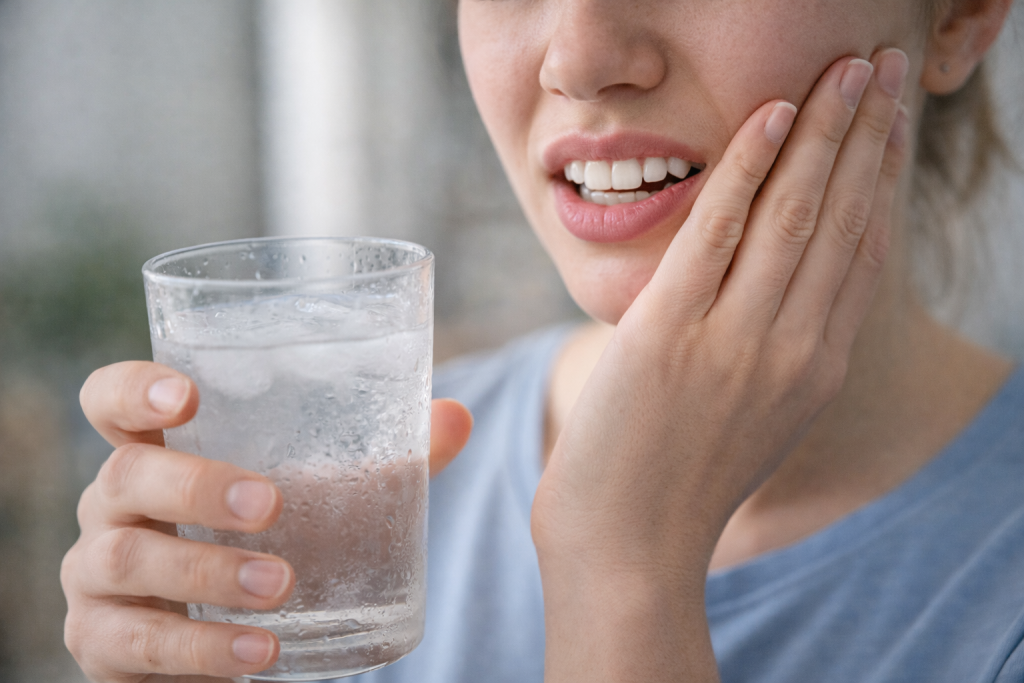
Tooth sensitivity can be confusing. One day, a sip of cold water feels completely normal. The next day, it sends a sharp zing through one tooth. Maybe hot coffee suddenly bothers you. Maybe sweets trigger a strange ache that lingers longer than expected. Maybe the discomfort comes and goes, which makes it easier to ignore.
Tooth sensitivity is one of those problems many people try to manage on their own for too long. They switch toothpaste, avoid certain foods, chew on the other side, and hope it settles down. Sometimes it does. But sometimes sensitivity is your mouth’s early way of saying that something needs attention.
If you have noticed discomfort with cold drinks, hot foods, or sweets in Downtown Vancouver, it helps to understand what sensitivity can mean and when it is worth getting checked.
Tooth sensitivity is a symptom, not a final diagnosis
This is the most important thing to understand. Sensitivity itself is not the condition. It is the signal.
That means the real question is not only “How do I stop this feeling?” but also “Why is this tooth reacting in the first place?” The answer can vary from person to person. In some cases, the cause is minor. In others, the sensitivity is an early sign of a cavity, a crack, gum recession, grinding, or irritation inside the tooth.
Because the possible causes are different, the right solution depends on identifying what is behind it.
7 common reasons teeth become sensitive
1. Worn enamel
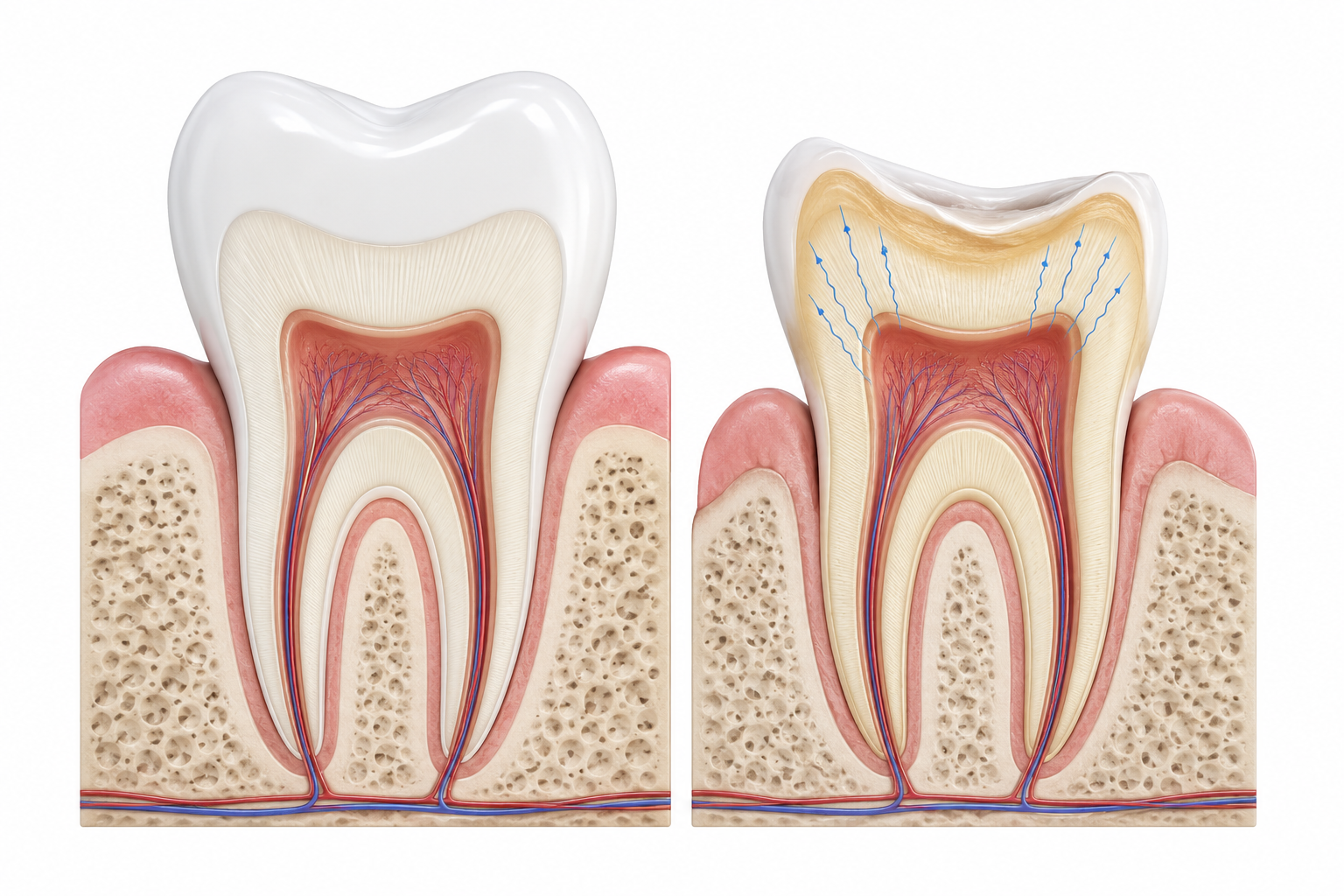
Enamel is the outer protective layer of the tooth. If it becomes thinner over time, the tooth may become more reactive to temperature and certain foods. This can happen from grinding, brushing too aggressively, or daily wear over time.
2. Gum recession
When gums recede, more vulnerable parts of the tooth may be exposed. Those areas can react more strongly to cold air, cold drinks, or brushing.
3. Cavities
A developing cavity can make a tooth more sensitive, especially to sweets or temperature changes. The discomfort may start mild, then gradually become more noticeable.
4. A cracked tooth
A small crack can make biting uncomfortable or trigger sharp pain with hot or cold foods. Cracks are not always visible to the patient, which is one reason sensitivity should not be dismissed too quickly.
5. Recent dental work
Some sensitivity can happen temporarily after dental treatment. If it improves steadily, that is often reassuring. If it lingers or worsens, it is worth checking.
6. Teeth grinding
Nighttime grinding can wear the teeth and increase sensitivity over time. Patients who also wake up with jaw tension or headaches may want to consider whether both issues are connected.
7. A problem inside the tooth
In some cases, sensitivity may mean the inner part of the tooth is irritated or inflamed. If this is the reason, the symptoms may become more intense or last longer after the trigger is removed. This is where a treatment like a root canal may become relevant, depending on what your dentist finds.
The type of sensitivity can offer clues
Sensitivity does not always feel the same, and the pattern may help narrow down the cause.
Cold sensitivity
This is one of the most common complaints. Cold water, ice cream, or even cool air can trigger a quick sharp feeling. Sometimes it is related to enamel wear or gum recession. Sometimes it points to a cavity or crack.
Heat sensitivity
Heat can be more concerning, especially if the pain lingers after the hot drink or food is gone. Lingering heat pain can be a sign that the tooth needs closer evaluation.
Sensitivity to sweets
If sugary foods trigger discomfort, a cavity may be part of the problem. That does not mean it always is, but it is a common enough possibility that it should not be ignored.
Pain when biting
If biting pressure causes sharp pain, a crack or structural issue may be involved. This is different from general sensitivity and is worth mentioning clearly during a dental visit.
When tooth sensitivity is mild and when it is not
Not every brief zing means something serious is happening. But the pattern matters.
You may be able to monitor it briefly if the sensitivity is:
- occasional
- mild
- clearly improving
- not tied to swelling, throbbing, or biting pain
It is smarter to book a dental checkup if the sensitivity:
- keeps returning
- becomes more noticeable
- lingers after eating or drinking
- affects one specific tooth repeatedly
- comes with visible damage
- is paired with swelling, pressure, or toothache
- makes you avoid chewing on one side
Why people often wait too long
Sensitivity has a habit of feeling manageable, at least at first. It comes and goes. It may only happen with certain foods. It may not interfere every day. So people adapt instead of investigating.
They drink through a straw. They avoid ice. They chew differently. They switch to lukewarm coffee. The problem with this approach is not that it buys a little time. The problem is that it can delay diagnosis. A small issue may stay small for a while, but not always.
What a dentist may check when you mention tooth sensitivity
When you bring up sensitivity, your dental team is usually looking for the reason behind the reaction. That may include checking for enamel wear, signs of grinding, gum recession, cavities, cracks, or signs that the tooth’s inner tissue may be irritated. They may also ask how long the pain lasts, whether it happens with cold, heat, sweets, or biting, and whether the same tooth keeps reacting.
These small details can be very helpful. Even the difference between “it stings for one second” and “it aches for a minute after” can matter.
Could it become an emergency?
Sometimes, yes. Tooth sensitivity is not always urgent, but it can move into more urgent territory if it becomes severe, constant, throbbing, or paired with swelling, visible damage, or pain that keeps you from eating or sleeping. If that happens, emergency dentistry may be the more appropriate direction rather than waiting too long.
The good news is that not every sensitive tooth turns into an emergency. The better news is that early evaluation often helps prevent that from happening.
Can cleanings help with sensitivity?
Sometimes they can. If plaque buildup, gum irritation, or neglected preventive care is part of the picture, improving your oral hygiene and staying current with hygiene cleanings may help reduce sensitivity over time. Cleanings do not solve every cause, but they are often part of maintaining a healthier mouth overall and catching issues earlier.
What you can do at home while waiting for your appointment
There are a few sensible things you can do without pretending to diagnose yourself:
- Use a soft toothbrush.
- Avoid aggressive brushing.
- Notice which foods trigger the tooth sensitivity.
- Pay attention to whether it is one tooth or several.
- Try not to chew repeatedly on the sore side if biting makes it worse.
These steps may help reduce irritation, but they are not a substitute for finding the cause if the issue keeps happening.
Why one sensitive tooth should not be ignored
When the sensitivity is always in one specific tooth, it is especially worth getting checked. A single tooth that reacts repeatedly may point to a local issue such as a cavity, crack, bite problem, or internal irritation.
People often hope that if they leave it alone, it will settle down. Sometimes it does. But if it does not, waiting usually does not make the eventual treatment simpler.
A calm and practical next step
Tooth sensitivity can have more than one cause, and that is exactly why it should be evaluated properly rather than guessed at. Sometimes the answer is simple. Sometimes the tooth needs more attention. Either way, the sooner you understand the reason, the easier it is to make a sensible plan.
Stop guessing about sensitive teeth
If cold drinks, hot coffee, sweets, or biting pressure make your teeth react, book a dental checkup with our Downtown Vancouver team to find the real cause.
Frequently asked questions
Why are my teeth suddenly sensitive?
Sudden tooth sensitivity is usually caused by worn enamel, gum recession, a developing cavity, a cracked tooth, teeth grinding, recent dental work, or irritation inside the tooth. A Vancouver dentist can identify the specific cause and recommend the right treatment.
Is tooth sensitivity a sign of a cavity?
Sometimes. A developing cavity can make a tooth more sensitive, especially to sweets or temperature changes. The discomfort may start mild and gradually become more noticeable. If sensitivity is focused on one tooth, it is worth getting checked.
Should I see a dentist for sensitive teeth?
Yes, especially if the sensitivity keeps returning, lingers after eating or drinking, affects one specific tooth, comes with visible damage or swelling, or makes you avoid chewing on one side. Early evaluation often prevents bigger problems.
Can sensitive teeth go away on their own?
Mild sensitivity after dental work or from brief irritation can sometimes settle on its own. But sensitivity caused by enamel wear, gum recession, cavities, or cracks usually does not resolve without treatment. If it persists, see a dentist.
Does sensitivity toothpaste really work?
Sensitivity toothpaste can help reduce mild discomfort from worn enamel or exposed dentin over time, but it does not fix underlying causes like cavities, cracks, or grinding. If sensitivity persists for more than a few weeks, see your Vancouver dentist.
When is tooth sensitivity an emergency?
Tooth sensitivity becomes an emergency if it turns severe, constant, or throbbing, or if it is paired with swelling, visible damage, or pain that keeps you from eating or sleeping. In those cases, contact a Vancouver emergency dentist right away.
This article is for general information only and does not replace a dental exam. If you have ongoing pain, swelling, or visible damage, please contact a dental professional.

